
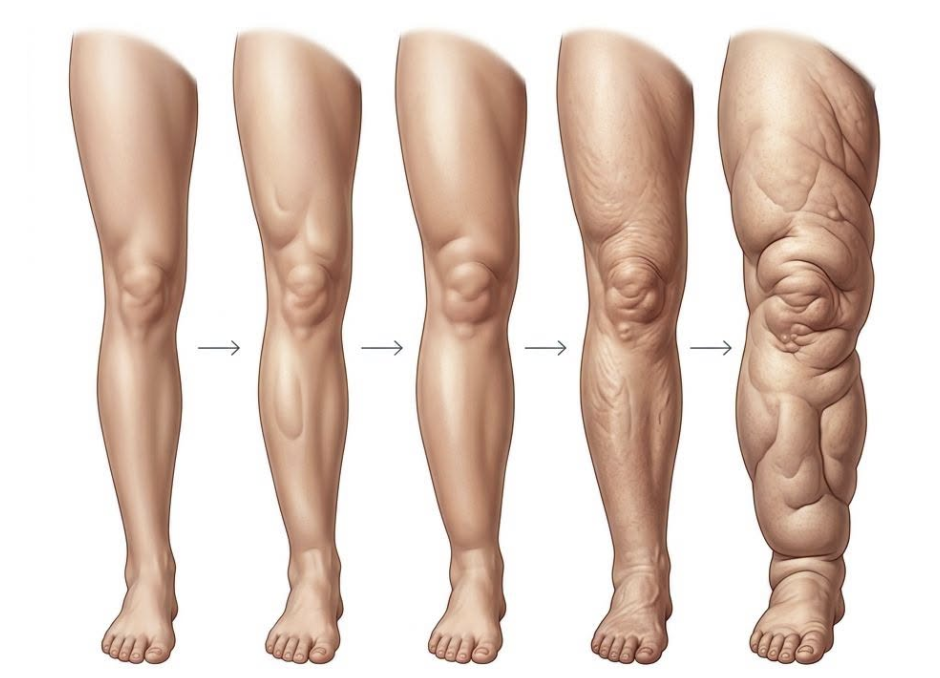
Lymphedema is more than swelling. It is a chronic condition in which the lymphatic system cannot adequately transport fluid, leading to accumulation of protein-rich fluid and, over time, inflammation, fibrosis, and tissue changes.
The earlier lymphedema is identified and managed, the better the opportunity to control progression.
Lymphedema does not always begin with obvious swelling. Early symptoms may include:
These symptoms can easily be overlooked or attributed to surgery, aging, inactivity, or another condition.
As lymphedema progresses, chronic fluid accumulation can contribute to inflammation, fibrosis, and changes in the tissues. These changes can make swelling more difficult to manage.
Research supports the importance of detecting and treating lymphedema early. A systematic review of breast cancer-related lymphedema found that early detection and intervention can reduce progression to chronic lymphedema.
More recent research continues to support this approach. A 2022 review of 12 studies involving 2,907 patients found that prospective surveillance combined with early intervention reduced progression to chronic breast cancer-related lymphedema.
Treatment depends on the individual’s condition and may include components of Complete Decongestive Therapy (CDT):
Early management is not simply about reducing limb size. It is about helping patients control swelling, protect tissue health, maintain mobility, and develop effective long-term management strategies.
Healthcare providers should consider a lymphedema evaluation when swelling is persistent, progressively worsening, or accompanied by heaviness, tightness, skin changes, or functional limitations.
Patients who have undergone cancer treatment, lymph node removal, radiation, surgery, or who have chronic venous disease may also benefit from early assessment.
Lymphedema is a chronic condition, but early recognition can provide an important opportunity for intervention before more significant tissue changes develop.
If you or your patient is experiencing persistent swelling, consider an evaluation by a healthcare professional trained in lymphedema management.
AALWM Clinic specializes in the evaluation and treatment of lymphedema and chronic swelling.
Need treatment? Visit AALWM Clinic
Interested in expanding your clinical skills? Healthcare professionals can also learn evidence-based lymphedema management through AALWM’s Certified Lymphedema Therapist (CLT) Training Program, which combines online education with hands-on, in-person training.
Learn more:
Interested in lymphedema training? Explore AALWM’s CLT Certification Program
Stout Gergich NL, et al. Preoperative assessment enables the early diagnosis and successful treatment of lymphedema. Cancer. 2008;112(12):2809–2819.
Shaitelman SF, et al. The impact of early detection and intervention of breast cancer-related lymphedema: a systematic review. Cancer Medicine. 2016.
Shah C, et al. Reducing rates of chronic breast cancer-related lymphedema with screening and early intervention: an update of recent data. Journal of Cancer Survivorship. 2022.
International Society of Lymphology. The Diagnosis and Treatment of Peripheral Lymphedema: 2023 Consensus Document. Lymphology. 2023.